
Mendoza, Between the Vines and the Andes
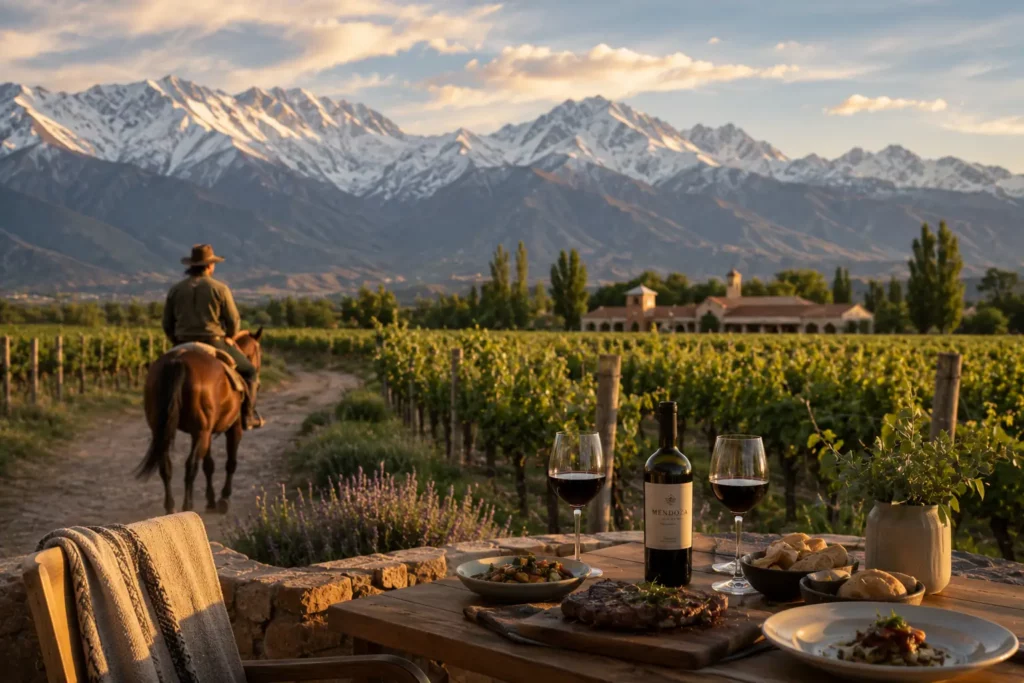
Come for the wine. Stay for everything else. There is a moment in Mendoza when the landscape wakes up. Winter retreats. The days become longer. The vineyards turn green again. And behind them, the Andes — still dusted with snow — rise almost impossibly close. It is spring. And between September and November, Mendoza is one of those places we find very difficult to resist. Not simply because of the wine. Because the Mendoza we love is about what happens between the wine. A horse beneath the Andes. Lunch that somehow becomes an entire afternoon. The smell of something cooking over fire. Meeting the person who actually made the bottle in your glass. And that wonderful moment at the end of the day when the mountains turn pink and there is absolutely no reason to go anywhere else. Drink less. Drink better. It is tempting to arrive in Mendoza with a list of wineries. Don’t. Or at least, make it a very short one. We would always choose one extraordinary tasting over four rushed ones. Meet the winemaker. Walk through the vineyard. Understand why something was planted here and not twenty kilometres away. Taste something you would never find at home. Then sit down for lunch. Mendoza has become one of South America’s most exciting gastronomic destinations, but what we love about eating here is still wonderfully simple. Fire. Local produce. A beautiful bottle. A table looking towards the vines. And time. Lots of it. This is not the place for a 45-minute lunch. The next morning, forget about wine Wake early. Put on boots. And head towards the mountains. One of our favourite ways to experience Mendoza has nothing to do with a wine glass at all. It is on horseback. As the vineyards disappear behind you, the landscape becomes drier, bigger and wilder. There is dust beneath the horses. An enormous sky above you. And the Andes ahead. Perhaps lunch is an asado somewhere in the foothills. Perhaps you ride for a few hours and return to the vineyards afterwards. It doesn’t really matter. What matters is the contrast. A long lunch one day. A saddle the next. Pleasure and movement. Wine and wilderness. That combination is what makes Mendoza so much more interesting than simply another wine region. Spring is particularly suited to this rhythm: longer, sunnier days invite you to spend more time outside, whether walking, cycling, riding or simply sitting among the vines. Sleep among the vines Where you stay matters here, because your hotel shouldn’t remove you from Mendoza. It should bring you closer to it. At Awasi Mendoza, 17 private villas sit within a vineyard at the foot of the Andes. What we particularly like is the freedom: private guiding and a 4×4 allow the days to be shaped around each traveller — wine one day, perhaps horses or hiking the next. The Vines Resort & Spa in the Uco Valley is another favourite, particularly for travellers who want wine and gastronomy to sit at the centre of the experience. And Casa de Uco feels beautifully connected to the scale of the Uco Valley, bringing together vineyards, nature, food and the Andes rather than treating them as separate experiences. We don’t believe there is a “best hotel” in Mendoza. There is simply the right one for the way you want to experience it. And then? Keep going. This is perhaps our favourite way to think about Mendoza. Don’t necessarily make it the entire journey. Make it a chapter. Begin in Buenos Aires. Give yourself a few days of restaurants, galleries, architecture, late dinners and that unmistakable energy the city has. Then fly west. Suddenly the buildings disappear. The horizon opens. For four or five days, slow everything down in Mendoza. Drink beautifully. Ride beneath the Andes. Have lunches without looking at the time. Leave an afternoon completely unplanned. And then change worlds once more. Go south. To Patagonia. Trade vineyards for forests, glaciers and enormous open landscapes. Walk if you want to walk. Ride if you want to ride. Navigate across a lake. Or simply sit somewhere extraordinary and watch the weather move across the mountains. Three places. Three completely different rhythms. Buenos Aires. Mendoza. Patagonia. City. Wine country. Wilderness. And suddenly what began as a few days drinking wine in Mendoza has become something much bigger: a journey through Argentina. Mendoza, our way When we design Mendoza at Latitude Boreal, we don’t begin with a list of wineries. We begin with you. Do you know everything about wine, or simply know that you enjoy drinking it? Would you rather spend the morning with a winemaker or on horseback? Do you want a Michelin-level lunch or an asado somewhere beneath the mountains? Three nights or five? A full day planned — or nowhere to be until dinner? There isn’t one correct Mendoza. And perhaps that’s precisely why we love it. Our version has fewer wineries. Longer lunches. More time outside. A little dust on your boots. A very good bottle waiting when you return. And the Andes, always somewhere in the background. Come in spring. Stay longer than you think. And whatever you do, don’t schedule lunch too tightly. The Andes aren’t going anywhere. The Latitude Journal
Travel, at Your Own Pace
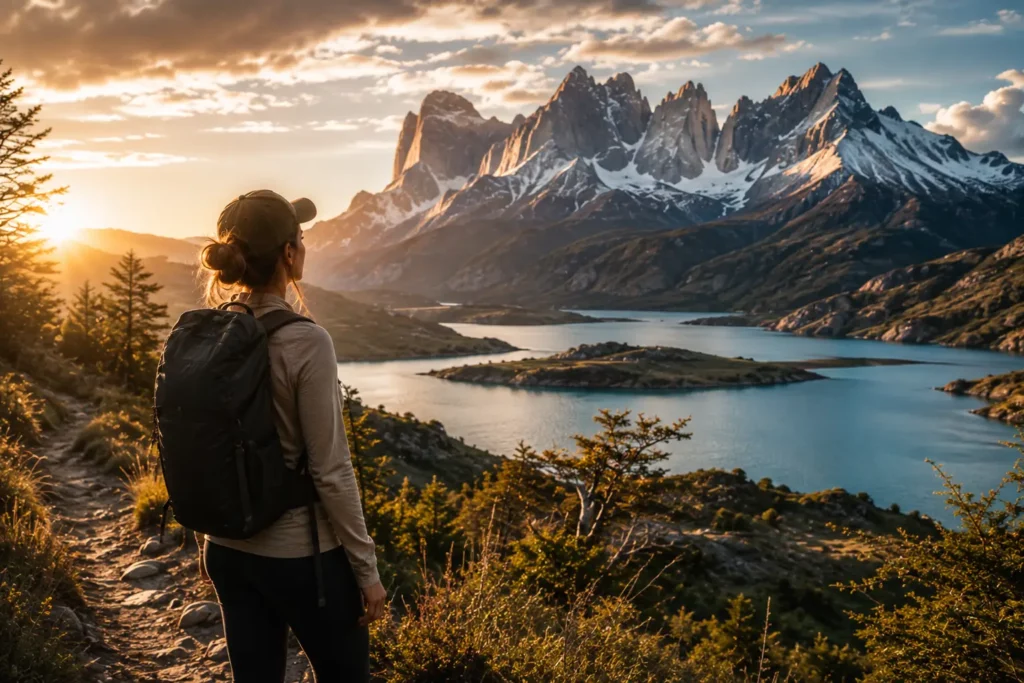
Why an active journey has very little to do with how far, fast or high you go. There are places we can admire from a distance. And there are places that invite us to step inside them. Latin America is full of the latter. The Andes, Patagonia, the Amazon, the Galápagos, Costa Rica’s forests, the vast landscapes of the Atacama — these are places where nature is not simply something to look at. It is something to experience. Sometimes that means walking. Sometimes riding a horse, kayaking across a lake, cycling through vineyards or navigating a river. And sometimes it simply means slowing down enough to feel part of the landscape around you. At Latitude Boreal, we believe movement can add an extraordinary dimension to a journey. But we also believe something equally important: The intensity is entirely yours. Active means something different to everyone When we talk about an active journey, we are not necessarily talking about adventure travel. There are travellers who dream of spending four days walking the Inca Trail. Others would love to experience its final section, arriving at Machu Picchu through the Sun Gate after a few hours on foot. And others would rather arrive comfortably and explore the Sacred Valley through shorter walks, beautiful drives and experiences designed entirely around their own rhythm. None is experiencing Peru better than the other. They are simply experiencing it differently. The same is true throughout Latin America. One traveller may want to spend an entire day trekking through Patagonia; another may prefer a gentle walk followed by fly fishing beside a lake. One might cross the foothills of the Andes on horseback; another might explore the same landscape by private 4×4. In the Sacred Valley, it could mean cycling between villages — or taking an e-bike. In Costa Rica, climbing and hiking around Arenal — or experiencing the rainforest from hanging bridges and carefully chosen trails. The destination remains extraordinary. What changes is the way we move through it. A different way of connecting with a place There is something that happens when we experience a landscape physically rather than simply observe it. We notice more. The temperature. The wind. The altitude. The smell of the vegetation. The sound of water. The way a landscape changes as we move through it. Some of my own strongest memories of Patagonia come from moving through its mountains. I love running, and spending hours surrounded by that landscape has taught me how dramatically a place can change when you experience it slowly and physically. Forests give way to exposed mountain terrain. Vegetation disappears. Temperatures fall. Wind, snow and silence take over. But you don’t need to run a mountain race to experience that connection. A forty-five-minute walk can do it. So can an afternoon on horseback. Or a kayak moving quietly across a lake. What matters isn’t the distance. It is the feeling of being inside the place rather than passing through it. The power of being present Perhaps this is one of the reasons movement and travel work so beautifully together. Our everyday lives rarely stop. There are messages to answer, decisions to make, places to be and an endless stream of things competing for our attention. Nature has a wonderful ability to quiet some of that noise. When you are walking a trail, navigating a river or riding across an open landscape, your attention naturally moves towards what is happening around you. The next turn in the path. The changing light. Your breathing. The sound of the forest. For a little while, there is less space for everything else. You are simply there. And that sense of presence is something we increasingly look for when designing journeys. Not because every trip needs to be transformative. Sometimes a holiday can simply be a wonderful holiday. But because giving ourselves moments of genuine connection with a place often creates the memories that remain long after we return home. Sometimes the best way in is by water Being active doesn’t necessarily mean being on your feet. Some of Latin America’s most extraordinary wilderness is best experienced from the water. The Galápagos is an obvious example. A small expedition ship or private yacht allows you to move between islands, waking each morning somewhere different and stepping ashore to explore according to your own interests and ability — perhaps walking, snorkelling or kayaking, perhaps experiencing the wildlife in a gentler way. The Peruvian Amazon has a similar rhythm. The river becomes the road. You navigate through the landscape and then decide how deeply you want to enter it: a forest walk, a quiet excursion by skiff, kayaking, wildlife observation or simply sitting on deck as the Amazon moves around you. The adventure doesn’t always lie in physical effort. Sometimes it lies in access. In reaching somewhere remote and experiencing a part of the world that feels completely removed from everyday life. Movement, without turning the journey into a challenge This distinction matters to us. An active journey should never feel like a test unless that is specifically what the traveller wants. It can contain movement without being physically demanding. A morning horseback ride can end with a long lunch overlooking the Andes. A walk through Patagonia can be followed by an afternoon beside the fire. Kayaking in the Sacred Valley can lead into a beautiful picnic. A day exploring Galápagos can end back aboard a boat with a glass of wine as the sun disappears. We like that contrast. Movement and stillness. Adventure and comfort. Discovery and time to simply enjoy where you are. And when somebody loves serious physical challenges, we can take that much further. Multi-day trekking. Long-distance riding. Mountain biking. Surfing. Rafting. Diving. The landscape gives us enormous possibilities. The question is never how active a journey should be. It is how active you want yours to be. Adventure should be accessible We also don’t believe a sense of adventure should be determined by age or physical ability. A traveller with limited
The First Journey of a Lifetime
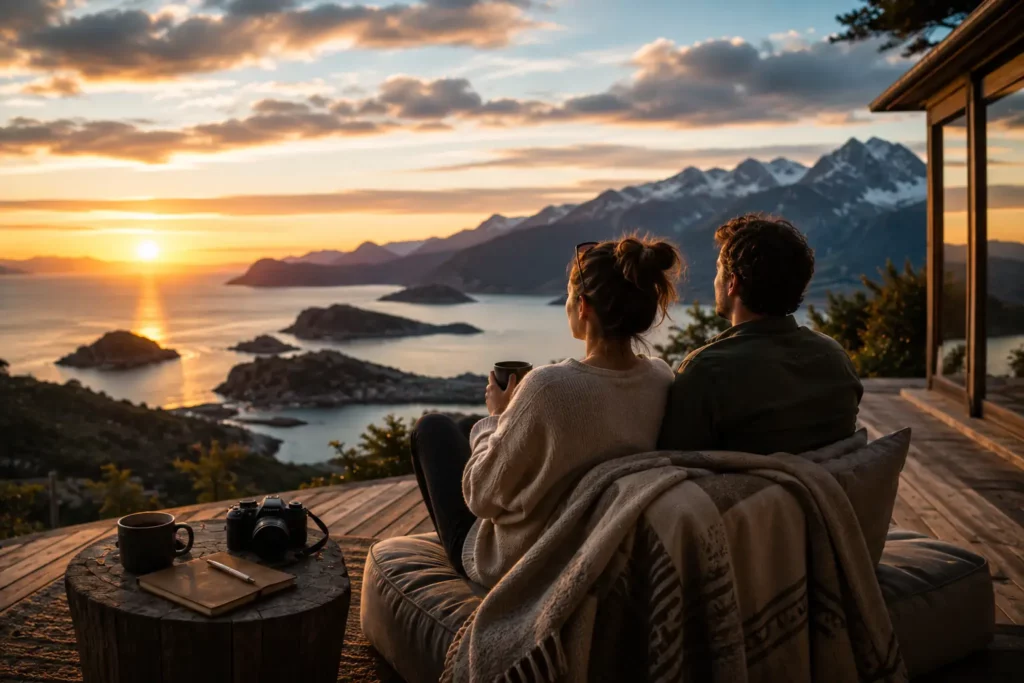
A few things I learned from designing my own honeymoon — and that I still believe today when we design them at Latitude Boreal. By Sofia Mármol There are many beautiful journeys we take throughout our lives. But very few mark the beginning of an entirely new chapter. A honeymoon does. Perhaps that is why I have always thought a honeymoon deserves to be designed differently. It isn’t simply the holiday that comes after the wedding. It is the first great journey you take after deciding to build a life together. And, if you get it right, years later you won’t only remember where you stayed or what you saw. You will remember how it felt to suddenly have all that time — and an entire piece of the world — to yourselves. When I look back at my own honeymoon, there are things I would change, of course. But there are a few decisions we made almost instinctively that I would make exactly the same way today. And interestingly, many of them have become part of the way we think about honeymoons at Latitude Boreal. Don’t be afraid to wait We got married on September 30. There was a pre-wedding celebration, the wedding itself and, the following day, another gathering with family and friends who had travelled from different places to celebrate with us. It was three days of incredibly high emotion. And then we did something slightly unexpected. We went back to work. We waited three weeks before leaving on our honeymoon. At the time it probably didn’t sound particularly romantic. Looking back, it was one of the best decisions we made. A wedding passes extraordinarily quickly. You spend months preparing for it, the days before are filled with nerves and anticipation, and then suddenly everyone you love is in one place and everything is happening at once. We wanted to let that experience settle. For three weeks, we returned to our normal lives. We worked. We talked endlessly about the wedding. We remembered tiny moments. We looked at photographs people sent us. We came down slowly from that extraordinary emotional high. And then, when we were ready, we left. The honeymoon didn’t feel like another item on the wedding schedule. It felt like the beginning of our married life. I still tell couples this today: don’t assume you need to leave the morning after your wedding. Maybe you do. But maybe the destination you dream about is better three weeks later. Maybe you need to recover. Maybe you want to enjoy that wonderful post-wedding bubble before replacing it immediately with another huge experience. There is no rule. The right honeymoon begins when you are ready to be completely present for it. Decide how much time you have before deciding how far to go Our honeymoon lasted 18 days. That mattered because we wanted to travel far. It sounds obvious, but I think couples sometimes choose the destination first and then try to squeeze it into the number of days they have. I prefer to do the opposite. Start with time. How many days can you genuinely disappear for? If you have eight days, I would rarely recommend spending a significant part of them crossing the world and recovering from jet lag. If you have two or three weeks, suddenly we can be more ambitious. We can go further. We can change landscapes. We can create different chapters within the same journey. And, most importantly, we can leave space. A honeymoon should never feel like a race to complete an itinerary. You don’t have to love exactly the same things Choosing a destination for two people isn’t always obvious. One may dream of hiking through the Andes while the other imagines a beautiful beach and nothing scheduled before lunch. One might love cities and restaurants; the other, surfing, horses or wilderness. That’s completely normal. Over time, our worlds begin to overlap. We discover things through each other and become curious about what the other person loves. So I don’t think a honeymoon should force you to choose between two personalities. It should contain a little of both. The best journeys find that balance — and often introduce you to something you didn’t know you would love. I believe in honeymoons with two acts If there is one idea from my own honeymoon that has stayed with me, it is this: Move first. Then stop. I love a first half with energy. That could mean trekking, riding, surfing, kayaking or cycling. Or it could simply mean discovering a great city — walking its neighbourhoods, eating somewhere wonderful, visiting galleries, learning its history, meeting people. There should be curiosity. Movement. A sense that you are discovering somewhere together. And then I like to change the rhythm completely. The second half should be about staying. Somewhere beautiful. Somewhere surrounded by nature. Somewhere that makes it very easy to forget what day it is. Ideally, somewhere that isn’t constantly receiving people from outside — a private island, a remote property, a lodge surrounded by wilderness, a place where the landscape becomes your world for a few days. Because this is where something interesting happens. You stop travelling. And you simply are. The luxury of nowhere else to be This is perhaps what I remember most clearly from my own honeymoon. After travelling, exploring cities, driving, surfing and moving from one place to another, we spent the final part of our journey in two very remote properties surrounded by sea. There wasn’t much we had to decide. We could kayak. Take a boat. Swim. Eat beautifully. Read. Spend hours on the beach. Or do absolutely nothing. And I remember how much we connected during those days. Our world became very small. Nature. The sea. The two of us. Today our lives move incredibly quickly. There is always another message, another meeting, another commitment, another place we need to be. That is why I think one of the greatest luxuries a honeymoon can offer has